

A dead outlet is one of those household problems that can feel either minor or alarming, depending on the cause. Sometimes it’s as simple as a tripped breaker you can reset in seconds. Other times, it points to something more serious, like deteriorating wiring hidden behind your walls.
The tricky part is knowing the difference. While a few basic checks are safe for any homeowner, electrical repairs come with real risks. Attempting work you aren’t qualified to perform can lead to shock, fire, or costly damage. When in doubt, it’s always safest to call a licensed electrician.
This guide walks you through the most common reasons an outlet stops working—from tripped breakers and GFCI outlets to worn receptacles, overloaded circuits, and faulty wiring. You’ll learn what you can safely check yourself, and when it’s time to bring in a professional.
Common Reasons an Electrical Outlet Stops Working
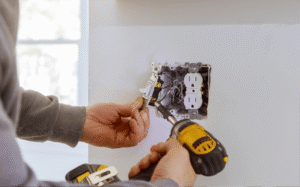 Before diving into the details, here’s a quick look at the usual suspects behind a dead outlet:
- A tripped circuit breaker
- A tripped GFCI outlet
- Loose or damaged wiring
- A worn-out electrical outlet
- An overloaded circuit
- A faulty appliance or device
- Damaged electrical connections
- Problems elsewhere on the same circuit
Some of these are easy to identify and fix. Others require a trained eye. Let’s break them down one by one.
Check for a Tripped Circuit Breaker
The circuit breaker is usually the first thing to check. When a circuit becomes overloaded or a fault occurs, the breaker trips to cut off power and protect your home. That’s often why an outlet suddenly goes dead.
Head to your electrical panel and look for a breaker that’s flipped to the “off” position or resting somewhere between “on” and “off.” Keep in mind that a tripped breaker doesn’t always look obvious—it may only be slightly out of line with the others. To reset it, flip it fully off, then back on.
If the breaker trips again right after you reset it, don’t keep forcing it back on. Repeated tripping is a warning sign of an overloaded circuit, a short circuit, or another underlying fault that needs professional attention.
Check Your GFCI Outlets
A GFCI (ground fault circuit interrupter) outlet is a special type of receptacle designed to shut off power the moment it detects a ground fault. You’ll recognize them by the small “test” and “reset” buttons on the face of the outlet.
GFCI outlets are most common in areas where water is present—bathrooms, kitchens, garages, and outdoor spaces. Because they protect against shock in damp conditions, they’re required by code in these locations.
Here’s something many homeowners don’t realize: a single GFCI outlet can protect several other outlets “downstream” on the same circuit. So if one GFCI trips, it may cause multiple outlets to lose power, even ones that look completely normal. Pressing the “reset” button often restores power to all of them.
If the GFCI won’t reset—or trips again immediately—there may be a genuine fault on the circuit. In that case, stop and call an electrician.
The Outlet May Be Worn Out or Damaged
Outlets don’t last forever. With years of use, plugs going in and out, and general wear, a receptacle can simply stop working. Watch for these warning signs:
- Loose plugs that fall out easily or don’t grip firmly
- Cracks or visible physical damage to the outlet face
- Discoloration, especially browning or yellowing
- Buzzing or unusual sounds coming from the outlet
- Burning smells or a surface that feels excessively warm
Any of these symptoms means the outlet should be inspected and likely replaced. A damaged receptacle isn’t just an inconvenience—it can become a safety hazard if left alone.
Loose or Faulty Electrical Wiring
Behind every outlet is a set of wire connections, and those connections can loosen or deteriorate over time. When that happens, the outlet may lose power intermittently or fail completely.
Older homes are especially prone to this. Aging wiring and outdated electrical components weren’t built for the demands of modern households, and decades of use can take a toll.
Wiring problems are not a DIY fix. They’re difficult to diagnose without proper tools, and mistakes can be dangerous. A licensed electrician has the training and equipment to safely locate the fault and repair it correctly.
Could the Circuit Be Overloaded?
Every circuit has a limit to how much electricity it can safely handle. Push past that limit and the breaker trips, leaving your outlets dead. A few common causes of overloading include:
- Too many devices running on one circuit at the same time
- High-demand appliances like space heaters, microwaves, or hair dryers
- Extension cords and power bars that pack too much onto a single outlet
If you find yourself constantly resetting breakers, or your outlets struggle to keep up with everyday use, your home’s electrical system may not have enough capacity for your needs. An electrician can assess whether an upgrade or additional circuits are worth considering.
Why Are Multiple Outlets Not Working?
When several outlets go dead at once, the cause usually lies with something they have in common. A few possibilities:
- Shared circuits: Multiple outlets are wired together, so a single problem affects them all.
- Tripped breakers: One breaker controls all the outlets on that circuit.
- GFCI protection: A tripped GFCI upstream cuts power to everything downstream.
- Loose connections: A faulty connection at one point can disrupt the rest of the circuit.
The upside? Multiple dead outlets actually give an electrician helpful clues. The pattern of what’s working and what isn’t helps pinpoint exactly where the problem lies.
Why Is Only One Outlet Not Working?
A single dead outlet often points to a more localized issue. Common culprits include:
- A failed receptacle that has simply worn out
- A loose connection at that specific outlet
- Damaged wiring feeding that one location
- A switched outlet that’s controlled by a wall switch (check to see if a nearby switch is off!)
The good news is that one dead outlet doesn’t mean your entire circuit has failed. In many cases, it’s an isolated problem that’s straightforward for an electrician to repair.
Signs You Should Call an Electrician
Some outlet problems are safe to troubleshoot on your own. Others are clear signals that it’s time to bring in a professional. Call a licensed electrician if:
- The outlet won’t work after you’ve checked the breaker and GFCI
- A breaker repeatedly trips after being reset
- A GFCI won’t reset
- The outlet feels hot to the touch
- You notice a burning smell
- You see sparks or hear buzzing
- There’s discoloration or melting around the outlet
- Multiple outlets suddenly stop working
These symptoms often indicate a fault that goes beyond a simple reset—and ignoring them can put your home at risk.
Can a Dead Electrical Outlet Be a Fire Hazard?
The loss of power itself doesn’t necessarily mean your outlet is a fire risk. In many cases, a dead outlet is simply the result of a tripped breaker or a worn receptacle.
That said, some underlying causes absolutely can create a fire hazard. Loose connections, overheating, and damaged wiring can all generate heat where it shouldn’t be. That’s why certain warning signs should never be ignored: burning smells, warmth around the outlet, scorch marks, buzzing sounds, or visible melting. If you notice any of these, stop using the outlet and call an electrician right away.
How an Electrician Diagnoses a Non-Working Outlet
When you call in a professional, they follow a systematic process to find the root cause. Typically, an electrician will:
- Inspect the receptacle for physical damage, wear, or discoloration
- Test the circuit to check for power and identify faults
- Check breakers and GFCIs to rule out simple trips
- Inspect connections and wiring for loose or damaged components
- Determine the scope—whether the issue is isolated to one outlet or affecting the whole circuit
- Repair or replace damaged components as needed
This structured approach ensures the real problem gets fixed, not just the symptom.
Preventing Electrical Outlet Problems
A little preventive care goes a long way toward avoiding dead outlets and the headaches that come with them. Here’s how to keep your system healthy:
- Avoid circuit overloads by spreading high-demand appliances across different circuits
- Replace visibly damaged outlets rather than continuing to use them
- Don’t ignore loose receptacles—a plug that won’t stay put is a sign something’s wrong
- Have older electrical systems inspected by a professional, especially in aging homes
- Address recurring breaker or GFCI trips instead of resetting them again and again
Staying on top of these small issues helps prevent bigger, more expensive problems down the road.
Need Help With a Non-Working Outlet in London, Ontario?
 If you’ve checked the breaker and GFCI and your outlet still won’t work, it’s time to call in the experts. Somerton Electric provides reliable residential electrical repair services throughout London, Ontario.
From troubleshooting dead outlets and outlet replacements to wiring repairs and full electrical inspections, our licensed team has you covered. We’ll diagnose the problem accurately and fix it safely, so you can get back to normal with peace of mind.
Don’t take chances with your home’s electrical system. Reach out to Somerton Electric today to request service or a quote.