

If you’ve noticed your lights flicker or dim the moment your air conditioner kicks on, you’re not alone. It’s easy to brush off the occasional flicker, until it becomes a pattern. A brief, barely noticeable dip in brightness can be completely normal, but frequent or severe dimming is a sign that something may be wrong with your home’s electrical system. Understanding why it happens is the first step toward keeping your home safe and your electrical system running efficiently.
Is It Normal for Lights to Dim When the Air Conditioner Starts?
The short answer: sometimes. Large appliances like air conditioners require a significant surge of electricity the moment they start up. This spike in demand is known as inrush current—a brief but intense draw of power that occurs as the compressor motor gets up to speed.
A dim that lasts less than a second and only affects nearby lights? That’s generally nothing to worry about. But if your lights dim noticeably, flicker repeatedly, stay dim for several seconds, or the effect spreads throughout the entire home, your electrical system deserves a closer look. These patterns suggest the system is struggling to handle the load—and that’s not something to ignore.
Common Reasons Your Lights Dim
The Air Conditioner Draws a Large Starting Current
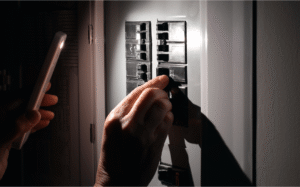 Air conditioner compressors are among the most power-hungry appliances in your home. During startup, they can draw three to eight times their normal running current. This sudden power surge temporarily drops the voltage in your electrical system, causing your lights to dim.
A slight, barely noticeable flicker is normal. But if you can clearly see the light output drop, your system may be near capacity or have an underlying issue worth addressing.
Your Electrical Panel Is Near Capacity
Older homes with 100-amp electrical service were designed for a different era. Decades ago, households had far fewer appliances. Add a modern HVAC system, an electric vehicle charger, smart appliances, and a home office setup to the mix, and a 100-amp panel can quickly become overwhelmed.
When multiple appliances run simultaneously and the panel is already near its limit, there’s little headroom left to absorb the AC’s startup surge. Signs that your panel may be struggling include frequently tripped breakers, the need to turn off one appliance to run another, or a panel that’s visibly outdated or full.
Loose Electrical Connections
Loose breakers, worn wiring, or a faulty neutral connection can all cause voltage fluctuations—especially under heavy load. When the AC pulls a surge of power and a connection isn’t solid, the system can’t respond smoothly. The result is dimming, flickering, or erratic behavior.
Loose connections aren’t just an inconvenience. They generate heat, which can degrade insulation and become a genuine fire hazard. If you suspect loose wiring, don’t delay—this one warrants immediate attention from a licensed electrician.
Voltage Drop
Voltage drop happens when electricity travels through wiring that’s too long or too narrow to carry the load efficiently. Older homes often have undersized wiring that made sense for smaller electrical demands but can’t keep up today. The longer the wire run and the more current flowing through it, the more voltage is lost along the way—causing lights to dim when high-draw appliances like AC units start up.
An Aging Air Conditioner
As air conditioners get older, their components wear down. Failing motors, dirty or degraded capacitors, and aging compressors all require more electrical energy to perform the same job. An AC unit that once started smoothly may now struggle to get going, drawing more power in the process and putting greater strain on your home’s electrical system each time it cycles on.
Signs the Problem May Be Serious
Most homeowners can tell the difference between a subtle flicker and something that feels wrong. The following symptoms suggest your electrical system needs professional evaluation:
- Lights dim throughout the entire house, not just in one room
- Lights flicker continuously, even when the AC isn’t running
- Breakers trip frequently
- You notice a burning smell near outlets, panels, or switches
- Your electrical panel buzzes or makes unusual sounds
- Outlets or switch plates feel warm to the touch
- The HVAC system struggles or hesitates to start
- Lights cycle between bright and dim repeatedly
Any one of these signs is reason enough to call a licensed electrician. Together, they can point to a serious and potentially dangerous electrical issue.
How an Electrician Diagnoses the Problem
Diagnosing the cause of light dimming involves more than a visual inspection. A licensed electrician will typically:
- Inspect the electrical panel for signs of wear, overloading, or outdated equipment
- Test voltage at key points throughout the home to identify where drops are occurring
- Test individual breakers for proper function and capacity
- Perform load calculations to determine whether the panel can support current and future electrical demands
- Check wiring connections for looseness, corrosion, or damage
- Inspect grounding to ensure the system is properly grounded
- Test the AC circuit specifically for capacity and integrity
- Coordinate with an HVAC technician if the issue appears to originate from the air conditioning unit itself
Possible Solutions
Upgrade Your Electrical Panel
If your home is running on an older 100-amp service, upgrading to a 200-amp panel may be the most effective long-term fix. A larger panel provides more capacity to handle the AC’s startup surge alongside your home’s other electrical demands.
Replace Worn Breakers
Breakers don’t last forever. Aging or damaged breakers may not respond correctly under load, contributing to voltage fluctuations. Replacing faulty breakers is a relatively straightforward fix that can make a real difference.
Repair Loose Wiring
Any loose or deteriorated wiring connections should be repaired promptly. Beyond causing dimming and flickering, loose connections are a leading cause of electrical fires. An electrician can identify and correct these safely.
Install a Dedicated Circuit
Air conditioners—especially larger central units—often perform better on a dedicated circuit that’s properly sized for their load. This isolates the AC’s power draw from the rest of the home, reducing the impact on lighting and other appliances.
Repair or Replace HVAC Components
If the issue stems from the air conditioner itself, targeted repairs can reduce the electrical strain it places on your system. Replacing a worn capacitor, repairing a struggling motor, or upgrading an aging compressor can significantly reduce startup amperage. This type of work typically involves coordination between an electrician and an HVAC contractor.
Can You Prevent Lights From Dimming?
Prevention comes down to regular maintenance and proactive upgrades. Here’s what helps:
- Schedule electrical inspections every few years, especially in older homes
- Replace aging electrical panels before they become a problem
- Avoid overloading circuits by distributing high-draw appliances across different breakers
- Upgrade outdated wiring that can’t safely handle modern electrical loads
- Maintain your HVAC system annually to keep components running efficiently
- Install whole-home surge protection to guard against voltage spikes
- Plan for increased electrical demand before renovating or adding major appliances
Need an Electrician in London, Ontario or surrounding areas?
 If your lights are dimming when the AC turns on and you’re not sure why, the safest move is to get a professional diagnosis before a minor issue becomes a major—or dangerous—one.
Our licensed and insured electricians specialize in residential electrical troubleshooting, panel upgrades, electrical inspections, and repairs for flickering lights and voltage issues. We serve London, St. Thomas, Strathroy, Woodstock, Dorchester, Komoka, and the surrounding Southwestern Ontario communities.
Contact us today to schedule an inspection and get to the bottom of your electrical concerns.