

It’s frustrating when your circuit breaker keeps tripping, but it’s also a warning sign from your electrical system. While a single trip might be a minor issue, a breaker that repeatedly cuts power indicates a deeper problem. Understanding the cause is the first step toward a safe and effective solution.
This guide walks you through the most common reasons circuit breakers trip, what you can safely troubleshoot yourself, and when it’s time to call in a professional.
Why Does a Circuit Breaker Keep Tripping?
Your circuit breaker is a safety device for your home’s electrical system. When it detects an issue, like too much current flowing through the wires, it trips. This action prevents overheating, electrical fires, and damage to your appliances.
A single tripped breaker might not be a concern, but if it keeps happening, it’s a clear warning sign. It could indicate an overloaded circuit, faulty wiring, or an issue with the breaker itself that needs to be addressed.
Distinguishing between a nuisance trip (an occasional reset) and a persistent issue is essential. Frequent trips indicate genuine electrical hazards that require attention.
Common Reasons a Circuit Breaker Keeps Tripping
Overloaded Circuit
An overloaded circuit occurs when you use more electricity than the circuit can handle. It’s like plugging too many devices into a single outlet… eventually, it will fail.
This is especially common in older homes with circuits not designed for modern, high-power appliances. For example, running a microwave, toaster, and coffee maker simultaneously might be enough to overload a standard 15-amp kitchen circuit.
Signs of an overload:
- The breaker trips when using multiple appliances at once
- Lights dim when you turn on high-wattage devices
- Outlets feel warm to the touch
Short Circuit
A short circuit occurs when a hot wire touches a neutral wire, causing a sudden surge of electricity. This creates excessive heat and can be dangerous if not addressed.
Short circuits can occur due to damaged wiring, faulty switches, loose connections, or appliances with internal wiring issues. Warning signs include scorch marks around outlets or a burning plastic smell, both of which require immediate attention.
Ground Fault
A ground fault occurs when electricity strays from its intended path and flows through a ground wire or a grounded surface instead. This is common in moisture-prone areas like kitchens, bathrooms, and outdoor outlets.
Ground Fault Circuit Interrupter (GFCI) outlets are designed to detect faults and shut off instantly to prevent electric shock. If your GFCI outlet keeps tripping, it’s functioning correctly—but you need to identify the cause.
Faulty or Worn-Out Breaker
Circuit breakers don’t last forever. Over time, the internal components wear out, making them more sensitive or unable to handle their rated load. An aging breaker might trip even when the circuit isn’t overloaded.
If your breaker is warm to the touch, won’t stay in the “on” position, or trips immediately after resetting, the breaker itself may need replacement.
Damaged or Aging Wiring
Old, frayed, or damaged wiring is a serious safety hazard. Wiring can degrade due to age, pests chewing through insulation, or poor installation. Damaged wires increase resistance, generate heat, and can cause your breaker to trip frequently.
Homes with aluminum wiring or outdated knob-and-tube systems are particularly at risk and often require professional rewiring.
How to Tell What’s Causing the Problem
Figuring out the exact cause takes a bit of detective work. Here’s what to look for:
Symptoms of an overloaded circuit:
- Breaker trips only when multiple devices are running
- Power goes out during peak usage times (like cooking dinner)
- No visible damage to outlets or appliances
Warning signs of a short circuit:
- Breaker trips immediately when you flip it back on
- Burning smell near outlets or the electrical panel
- Scorch marks or discoloration around switches and outlets
- Sparking when plugging in devices
Indicators of a ground fault:
- GFCI outlets trip frequently, especially in bathrooms or kitchens
- Breaker trips when using appliances near water
- Outlets near sinks or outdoor areas are affected
Clues the breaker itself is failing:
- Breaker feels hot to the touch
- Won’t reset or immediately trips again
- Makes buzzing or crackling sounds
- Breaker is older than 15–20 years
What You Can Safely Try Before Calling an Electrician
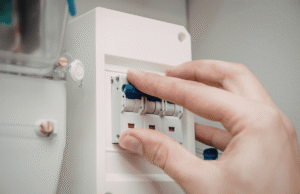 Before reaching for the phone, there are a few safe troubleshooting steps you can take. Important: Never open your electrical panel or attempt any wiring work yourself.
How to Properly Reset a Breaker
- Turn off or unplug all devices connected to the affected circuit.
- Find the tripped breaker—it will be positioned between “on” and “off.”
- Push the breaker fully to the “off” position.
- Flip it back to “on.”
- Wait a few minutes before reconnecting or powering on your devices.
Reduce the Load
If you suspect an overload, try redistributing your devices. Plug high-wattage appliances like space heaters, microwaves, or hairdryers into different circuits. Avoid using extension cords or power strips for major appliances.
Identify a Problem Appliance
To identify a faulty appliance, unplug all devices from the circuit and reset the breaker. Then, plug in each device one by one. If plugging in a specific item causes the breaker to trip again, that appliance is likely the problem and should be inspected or replaced.
Safety Disclaimer
Do not attempt to:
- Open or work inside your electrical panel
- Touch any wiring or connections
- Reset a breaker that’s hot, smoking, or damaged
- Continue using a circuit that trips repeatedly
When a Tripping Circuit Breaker Is an Emergency
Some situations require immediate professional help. Call an electrician right away if you notice:
- Breaker trips immediately after reset, even with nothing plugged in
- Burning smells, smoke, or visible scorch marks around outlets or the panel
- Warm or buzzing electrical panel—this indicates serious internal problems
- Power loss affecting essential systems like your furnace, sump pump, or medical equipment
- Sparks or arcing when resetting the breaker
These are signs of dangerous electrical faults that could lead to fires or electrocution. Don’t wait—get professional help immediately.
Can You Fix a Tripping Circuit Breaker Yourself?
The short answer? Sometimes, but not always.
What homeowners can do:
- Reset the breaker correctly
- Unplug devices to reduce load
- Identify which appliance is causing the problem
- Replace faulty appliances
What you should never attempt:
- Opening or working inside the electrical panel
- Replacing a circuit breaker yourself
- Repairing or replacing wiring
- Bypassing safety devices
Risks of DIY Electrical Work
Electrical work is hazardous. Without proper training, you risk electric shock, fire, or making the problem worse. In Ontario, electrical work must be performed by licensed electricians to meet safety codes and insurance requirements. DIY repairs could void your home insurance and create liability issues.
When in doubt, call a professional. It’s not worth the risk.
How a Licensed Electrician Fixes a Circuit Breaker Issue
Professional electricians have the training, tools, and experience to diagnose and repair electrical problems safely. Here’s what they’ll do:
Electrical Inspection and Diagnostics
Using specialized testing equipment, an electrician will inspect your panel, circuits, and wiring to identify the root cause. They’ll check for overloads, short circuits, ground faults, and signs of aging or damage.
Load Testing and Circuit Balancing
If your circuits are overloaded, an electrician can redistribute the electrical load more evenly across your panel. They may recommend adding new circuits or upgrading your panel to handle increased demand.
Breaker Replacement vs. Wiring Repair
Depending on the diagnosis, the electrician will either replace the faulty breaker or repair damaged wiring. In some cases, upgrading to AFCI (Arc Fault Circuit Interrupter) breakers may be recommended for added safety.
For homeowners in Ontario dealing with persistent breaker issues, companies like Somerton Electric offer professional electrical inspections, panel upgrades, and circuit repairs to keep your home safe and code-compliant.
Keep Your Home Safe and Powered
A tripping circuit breaker is your home’s way of signaling an electrical hazard. While you can sometimes fix it by reducing the load or replacing a faulty appliance, persistent issues require professional help.
Don’t ignore the warning signs. Whether it’s an overloaded circuit, damaged wiring, or a failing breaker, addressing the root cause early can prevent costly damage and keep your family safe.
If your circuit breaker keeps tripping, contact a licensed electrician for a thorough inspection. They can ensure your electrical system is safe, up to code, and capable of handling your home’s power needs.